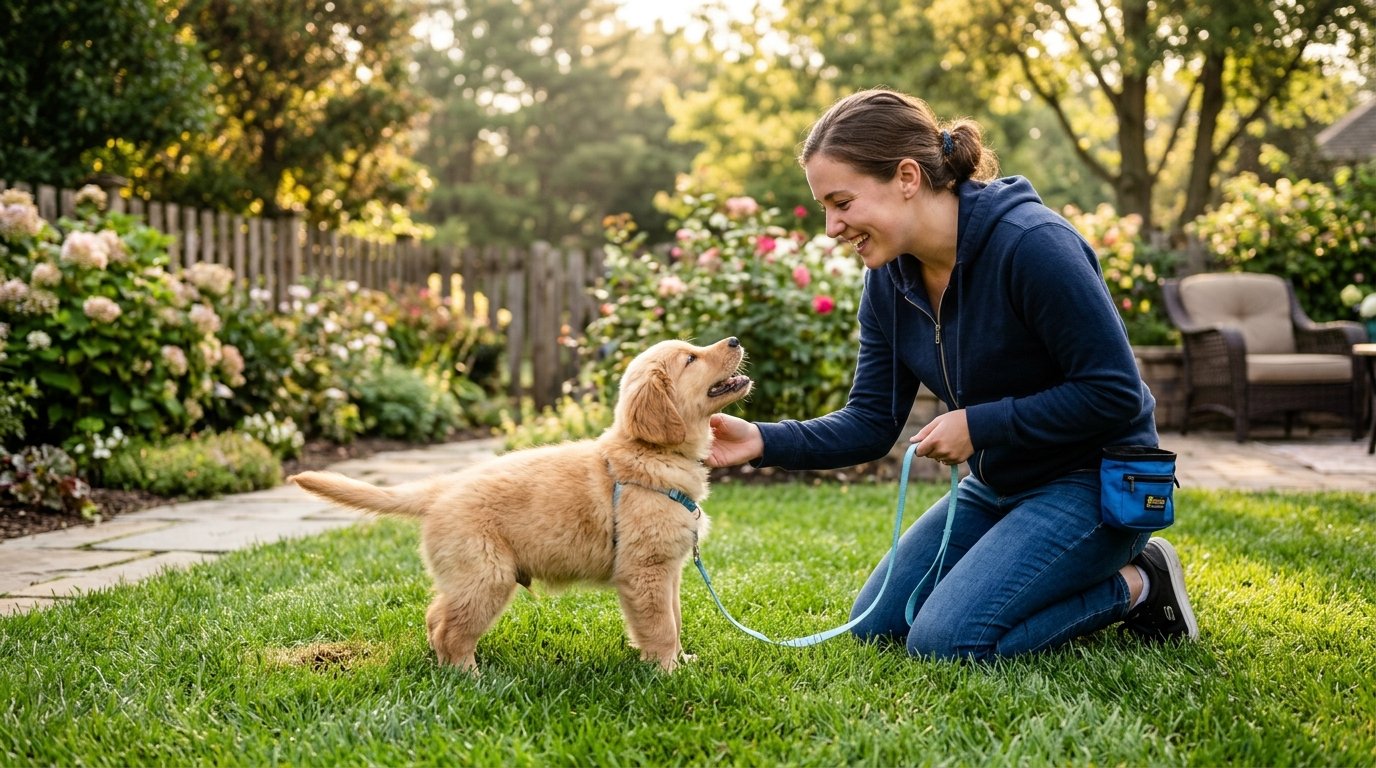
How to Potty Train a Puppy Fast Simple Guide
How to Potty Train a Puppy Fast Simple Guide! Bringing a puppy home is an exciting experience, but potty training can quickly become one of the biggest challenges for a new dog owner. Small accidents on carpets, floors, or furniture are common because young puppies are still learning where they should go and have limited bladder control.How to Potty Train a Puppy Fast Simple Guide
The good news is that potty training does not have to be complicated. With a predictable routine, close supervision, positive reinforcement, and patience, you can help your puppy develop good bathroom habits.How to Potty Train a Puppy Fast Simple Guide
If you want to know how to potty train a puppy fast, the most important thing to remember is that consistency matters more than rushing. Puppies develop at different rates, so your goal should be steady progress rather than expecting perfect results in just a few days.
Why Do Puppies Have Accidents?
Puppies do not have the same bladder control as adult dogs. They may need to eliminate frequently, especially after sleeping, eating, drinking, playing, or getting excited.
A puppy may also have accidents because it does not yet understand where the bathroom area is. If your puppy has recently arrived at your home, everything is new, including the smells, rooms, people, and daily routine.How to Potty Train a Puppy Fast Simple Guide
Understanding these reasons can help you approach potty training with patience instead of frustration.

Start Potty Training Immediately
You do not need to wait until your puppy is older before beginning house training. Start establishing good habits as soon as your puppy arrives.
Choose the location where you want your puppy to eliminate. If your goal is outdoor potty training, take the puppy to the same general area whenever possible.
A familiar location can help your puppy develop a connection between that place and bathroom behavior.
Create a Consistent Daily Routine
A regular schedule is one of the best tools for successful potty training.
Take your puppy outside at predictable times, especially:
- Immediately after waking up
- After meals
- After drinking
- After naps
- After active play
- Before bedtime
- When the puppy shows signs of needing to go
Very young puppies may need additional bathroom breaks throughout the day.
As your puppy grows and develops better bladder control, you can gradually increase the time between trips.
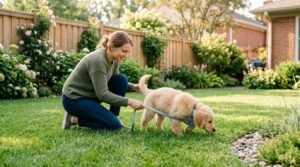
Learn Your Puppy’s Potty Signals
Every puppy is different, but many dogs show certain behaviors before they need to eliminate.
Look for signs such as:
Sniffing the Floor
Repeated sniffing can indicate that your puppy is searching for a suitable bathroom spot.
Circling
Some puppies walk around in circles before urinating or defecating.
Restlessness
A puppy that suddenly stops playing and starts wandering around may need to go outside.
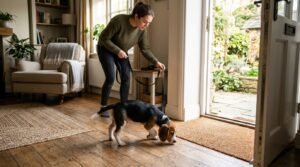
Moving Toward a Door
Some puppies eventually learn to approach the door when they need to go.
Pay attention to your puppy’s individual behavior. Recognizing these signs early can prevent many accidents.
Take Your Puppy to One Potty Spot
Choose a specific outdoor area and use it consistently.
When you reach the location, give your puppy time to sniff and explore. Avoid immediately distracting it with toys or games.
You can introduce a simple phrase such as “go potty.”
Say the phrase calmly while your puppy is in the designated area. With repetition, your puppy may eventually associate the words with the bathroom routine.
Reward Your Puppy Immediately
Positive reinforcement is an important part of potty training.
When your puppy successfully eliminates in the correct location, praise it immediately. You can also provide a small training treat if appropriate.
The reward should happen soon after the behavior so your puppy can make the connection.
A simple pattern is:
Go outside → potty → praise → reward → play.
This makes the correct behavior more rewarding.
Supervise Your Puppy Indoors
During the early stages of potty training, supervision is extremely important.
Try to keep your puppy in the same room as you or within an area where you can easily observe it.
If the puppy begins sniffing, circling, or wandering toward a quiet corner, take it outside.
Avoid giving an untrained puppy complete access to the house. Gradually increase its freedom as its potty habits improve
Use a Crate Correctly
A properly introduced crate can be useful for potty training.
Many puppies naturally prefer to keep their sleeping area clean. A comfortable crate can therefore help create a distinction between resting and bathroom areas.
However, the crate should never be used as punishment.How to Potty Train a Puppy Fast Simple Guide
Make the crate a positive place where your puppy can rest safely. Most importantly, do not leave a young puppy confined for too long simply to prevent accidents.
Regular bathroom breaks are still necessary.
Handle Indoor Accidents Calmly
Accidents are a normal part of puppyhood.
If you discover urine or stool indoors, clean the area thoroughly. An enzymatic pet cleaner can help remove odors that may encourage your puppy to use the same place again.
Do not punish your puppy for an accident that has already happened.
The puppy will not understand why it is being punished after the event.
Instead, focus on preventing the next accident.
Never Rub Your Puppy’s Nose in a Mess
Rubbing a puppy’s nose in an accident is an outdated and ineffective approach.
It can frighten the puppy without teaching it where to eliminate.
If you catch your puppy starting an accident, calmly interrupt it and take it outside. If it finishes outside, reward the correct behavior.
The objective is to teach, not frighten.
Establish Regular Feeding Times
A consistent feeding routine can make potty training easier.
Many puppies need to eliminate after eating, so taking your puppy outside after meals can help prevent accidents.
Try to keep feeding times relatively predictable.
However, never restrict water simply because you are worried about accidents. Puppies need proper hydration.
If you notice unusual thirst or a sudden increase in urination, speak with a veterinarian.
Potty Training at Night
Nighttime potty training may take longer because young puppies often cannot hold their bladder throughout the night.
Take your puppy outside shortly before bedtime.How to Potty Train a Puppy Fast Simple Guide
Depending on age and individual development, a young puppy may need an additional nighttime bathroom trip.
Keep these trips calm and boring. Take the puppy outside, allow it to eliminate, praise it quietly, and return to bed.
Avoid turning nighttime potty breaks into playtime.

Are Puppy Pads a Good Option?
Puppy pads can be useful for owners who cannot provide immediate outdoor access.
They provide a designated indoor location for bathroom breaks.
However, if your ultimate goal is outdoor-only potty training, your puppy may later need to learn that the outdoor area is the preferred location.
If you use puppy pads, place them in one consistent area and reward your puppy for using them correctly.
Give Your Puppy Freedom Gradually
A common mistake is allowing a puppy to explore the entire house too soon.
Even if your puppy has gone several days without an accident, it may not yet have reliable bladder control.
Start with a smaller, puppy-proofed area.
As your puppy consistently uses the correct bathroom location, gradually allow access to additional rooms.
This approach can reduce accidents and make supervision easier.
What Should You Do If an Accident Starts?
If you see your puppy beginning to urinate or defecate indoors, stay calm.
Use a gentle interruption and immediately take the puppy outside.
Give it enough time to finish.
If it successfully completes the bathroom trip outdoors, praise and reward it.
This helps your puppy understand where the desired behavior should happen.
Common Potty Training Mistakes
Changing the Routine
Frequently changing feeding and bathroom schedules can make learning harder.
Try to keep your puppy’s routine predictable.How to Potty Train a Puppy Fast Simple Guide
Missing Potty Signals
Some puppies do not bark or scratch at the door. They may simply sniff or become restless.
Learning these subtle signals can make a big difference.
Giving Too Much Freedom
Allowing a puppy to roam freely before it is reliably trained can lead to accidents in hidden areas.
Increase freedom gradually.
Expecting Instant Results
Potty training is a learning process. Some puppies progress quickly, while others need more time.Do not become discouraged by occasional setbacks.
How Long Does Potty Training Take?
There is no universal timetable for potty training.
A puppy’s age, size, individual development, previous experience, routine, and supervision can all affect the process.
Some puppies become reliable relatively quickly, while others require several weeks or longer.
Instead of focusing only on how fast the training happens, look for gradual improvement.
Fewer accidents, better signals, and more successful outdoor trips are all signs that your puppy is learning.
When Should You Contact a Veterinarian?
Occasional accidents are normal, but certain changes may require veterinary attention.
Contact a veterinarian if your puppy:
- Has difficulty urinating
- Appears painful when eliminating
- Has blood in urine or stool
- Develops persistent diarrhea
- Suddenly urinates much more frequently
- Drinks unusually large amounts of water
- Suddenly loses previously established potty habits
A health problem can sometimes look like a training problem, so unusual changes should not be ignored.
Frequently Asked Questions
What is the easiest way to potty train a puppy?
Create a consistent routine, take the puppy outside frequently, supervise it indoors, and immediately reward successful potty trips.
How often should I take my puppy outside?
Young puppies generally need frequent bathroom opportunities, particularly after sleeping, eating, drinking, and playing. The exact schedule depends on the puppy’s age and individual needs.
Should I punish my puppy for accidents?
No. Punishment can create fear and confusion. Instead, clean the accident and focus on preventing future incidents.
Can a crate help with potty training?
Yes, when introduced positively and used appropriately. A crate should never replace regular bathroom breaks or be used as punishment.
Are puppy pads necessary?
No. Puppy pads are optional and can be useful when outdoor access is difficult. Your choice should depend on your living situation and long-term potty-training goals.
Final Thoughts
Learning how to potty train a puppy fast is really about creating a system that your puppy can understand.
Take your puppy outside regularly, use a familiar potty location, watch for bathroom signals, and reward successful trips immediately. Supervise your puppy indoors and increase its freedom only after it becomes more reliable.How to Potty Train a Puppy Fast Simple Guide
Most importantly, avoid punishment. Accidents are a normal part of puppy development, and patience is essential.
With a consistent routine and positive training, your puppy can gradually understand where it should go, develop better bathroom habits, and become a well-trained companion.
How to Potty Train a Puppy Fast: Simple Guide
Bringing a puppy home is an exciting experience, but potty training can quickly become one of the biggest challenges for a new dog owner. Small accidents on carpets, floors, or furniture are common because young puppies are still learning where they should go and have limited bladder control.How to Potty Train a Puppy Fast Simple Guide
The good news is that potty training does not have to be complicated. With a predictable routine, close supervision, positive reinforcement, and patience, you can help your puppy develop good bathroom habits.
If you want to know how to potty train a puppy fast, the most important thing to remember is that consistency matters more than rushing. Puppies develop at different rates, so your goal should be steady progress rather than expecting perfect results in just a few days.How to Potty Train a Puppy Fast Simple Guide
Why Do Puppies Have Accidents?
Puppies do not have the same bladder control as adult dogs. They may need to eliminate frequently, especially after sleeping, eating, drinking, playing, or getting excited.
A puppy may also have accidents because it does not yet understand where the bathroom area is. If your puppy has recently arrived at your home, everything is new, including the smells, rooms, people, and daily routine.How to Potty Train a Puppy Fast Simple Guide
Understanding these reasons can help you approach potty training with patience instead of frustration.
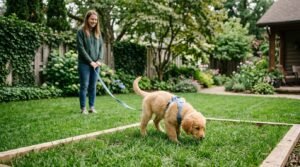
Start Potty Training Immediately
You do not need to wait until your puppy is older before beginning house training. Start establishing good habits as soon as your puppy arrives.
Choose the location where you want your puppy to eliminate. If your goal is outdoor potty training, take the puppy to the same general area whenever possible.
A familiar location can help your puppy develop a connection between that place and bathroom behavior.
Create a Consistent Daily Routine
A regular schedule is one of the best tools for successful potty training.
Take your puppy outside at predictable times, especially:
- Immediately after waking up
- After meals
- After drinking
- After naps
- After active play
- Before bedtime
- When the puppy shows signs of needing to go
Very young puppies may need additional bathroom breaks throughout the day.
As your puppy grows and develops better bladder control, you can gradually increase the time between trips.
Learn Your Puppy’s Potty Signals
Every puppy is different, but many dogs show certain behaviors before they need to eliminate.
Look for signs such as:
Sniffing the Floor
Repeated sniffing can indicate that your puppy is searching for a suitable bathroom spot.
Circling
Some puppies walk around in circles before urinating or defecating.
Restlessness
A puppy that suddenly stops playing and starts wandering around may need to go outside.
Moving Toward a Door
Some puppies eventually learn to approach the door when they need to go.
Pay attention to your puppy’s individual behavior. Recognizing these signs early can prevent many accidents.How to Potty Train a Puppy Fast Simple Guide
Choose a specific outdoor area and use it consistently
When you reach the location, give your puppy time to sniff and explore. Avoid immediately distracting it with toys or games.
You can introduce a simple phrase such as “go potty.”
Say the phrase calmly while your puppy is in the designated area. With repetition, your puppy may eventually associate the words with the bathroom routine.

Reward Your Puppy Immediately
Positive reinforcement is an important part of potty training.
When your puppy successfully eliminates in the correct location, praise it immediately. You can also provide a small training treat if appropriate.
The reward should happen soon after the behavior so your puppy can make the connection.
A simple pattern is:
Go outside → potty → praise → reward → play.
This makes the correct behavior more rewarding.
Supervise Your Puppy Indoors
During the early stages of potty training, supervision is extremely important.
Try to keep your puppy in the same room as you or within an area where you can easily observe it.
If the puppy begins sniffing, circling, or wandering toward a quiet corner, take it outside.
Avoid giving an untrained puppy complete access to the house. Gradually increase its freedom as its potty habits improve.
Use a Crate Correctly
A properly introduced crate can be useful for potty training.
Many puppies naturally prefer to keep their sleeping area clean. A comfortable crate can therefore help create a distinction between resting and bathroom areas.
However, the crate should never be used as punishment.
Make the crate a positive place where your puppy can rest safely. Most importantly, do not leave a young puppy confined for too long simply to prevent accidents.
Regular bathroom breaks are still necessary.
Handle Indoor Accidents Calmly
Accidents are a normal part of puppyhood.
If you discover urine or stool indoors, clean the area thoroughly. An enzymatic pet cleaner can help remove odors that may encourage your puppy to use the same place again.
Do not punish your puppy for an accident that has already happened.
The puppy will not understand why it is being punished after the event.
Instead, focus on preventing the next accident.
Never Rub Your Puppy’s Nose in a Mess
Rubbing a puppy’s nose in an accident is an outdated and ineffective approach.
It can frighten the puppy without teaching it where to eliminate.
If you catch your puppy starting an accident, calmly interrupt it and take it outside. If it finishes outside, reward the correct behavior.
The objective is to teach, not frighten.How to Potty Train a Puppy Fast Simple Guide
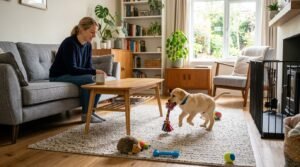
Establish Regular Feeding Times
A consistent feeding routine can make potty training easier.
Many puppies need to eliminate after eating, so taking your puppy outside after meals can help prevent accidents.
Try to keep feeding times relatively predictable.
However, never restrict water simply because you are worried about accidents. Puppies need proper hydration.
If you notice unusual thirst or a sudden increase in urination, speak with a veterinarian.
Potty Training at Night
Nighttime potty training may take longer because young puppies often cannot hold their bladder throughout the night.
Take your puppy outside shortly before bedtime.
Depending on age and individual development, a young puppy may need an additional nighttime bathroom trip.
Keep these trips calm and boring. Take the puppy outside, allow it to eliminate, praise it quietly, and return to bed.
Avoid turning nighttime potty breaks into playtime.
Are Puppy Pads a Good Option?
Puppy pads can be useful for owners who cannot provide immediate outdoor access.
They provide a designated indoor location for bathroom breaks.
However, if your ultimate goal is outdoor-only potty training, your puppy may later need to learn that the outdoor area is the preferred location.
If you use puppy pads, place them in one consistent area and reward your puppy for using them correctly.
Give Your Puppy Freedom Gradually
A common mistake is allowing a puppy to explore the entire house too soon.
Even if your puppy has gone several days without an accident, it may not yet have reliable bladder control.
Start with a smaller, puppy-proofed area.
As your puppy consistently uses the correct bathroom location, gradually allow access to additional rooms.
This approach can reduce accidents and make supervision easier.
What Should You Do If an Accident Starts?
If you see your puppy beginning to urinate or defecate indoors, stay calm.
Use a gentle interruption and immediately take the puppy outside.
Give it enough time to finish.
If it successfully completes the bathroom trip outdoors, praise and reward it.
This helps your puppy understand where the desired behavior should happen.
Common Potty Training Mistakes
Changing the Routine
Frequently changing feeding and bathroom schedules can make learning harder.
Try to keep your puppy’s routine predictable.
Missing Potty Signals
Some puppies do not bark or scratch at the door. They may simply sniff or become restless.
Learning these subtle signals can make a big difference.
Giving Too Much Freedom
Allowing a puppy to roam freely before it is reliably trained can lead to accidents in hidden areas.
Increase freedom gradually.
Expecting Instant Results
Potty training is a learning process. Some puppies progress quickly, while others need more time.
Do not become discouraged by occasional setbacks.

How Long Does Potty Training Take?
There is no universal timetable for potty training.
A puppy’s age, size, individual development, previous experience, routine, and supervision can all affect the process.
Some puppies become reliable relatively quickly, while others require several weeks or longer.
Instead of focusing only on how fast the training happens, look for gradual improvement.
Fewer accidents, better signals, and more successful outdoor trips are all signs that your puppy is learning.
When Should You Contact a Veterinarian?
Occasional accidents are normal, but certain changes may require veterinary attention.
Contact a veterinarian if your puppy:
- Has difficulty urinating
- Appears painful when eliminating
- Has blood in urine or stool
- Develops persistent diarrhea
- Suddenly urinates much more frequently
- Drinks unusually large amounts of water
- Suddenly loses previously established potty habits
A health problem can sometimes look like a training problem, so unusual changes should not be ignored.
Frequently Asked Questions
What is the easiest way to potty train a puppy?
Create a consistent routine, take the puppy outside frequently, supervise it indoors, and immediately reward successful potty trips.
How often should I take my puppy outside?
Young puppies generally need frequent bathroom opportunities, particularly after sleeping, eating, drinking, and playing. The exact schedule depends on the puppy’s age and individual needs.How to Potty Train a Puppy Fast Simple Guide
Should I punish my puppy for accidents?
No. Punishment can create fear and confusion. Instead, clean the accident and focus on preventing future incidents.
Can a crate help with potty training?
Yes, when introduced positively and used appropriately. A crate should never replace regular bathroom breaks or be used as punishment.
Are puppy pads necessary?
No. Puppy pads are optional and can be useful when outdoor access is difficult. Your choice should depend on your living situation and long-term potty-training goals.
Final Thoughts
Learning how to potty train a puppy fast is really about creating a system that your puppy can understand.
Take your puppy outside regularly, use a familiar potty location, watch for bathroom signals, and reward successful trips immediately. Supervise your puppy indoors and increase its freedom only after it becomes more reliable.How to Potty Train a Puppy Fast Simple Guide
Most importantly, avoid punishment. Accidents are a normal part of puppy development, and patience is essential.
With a consistent routine and positive training, your puppy can gradually understand where it should go, develop better bathroom habits, and become a well-trained companion.How to Potty Train a Puppy Fast Simple Guide