Animals That Live in the Mountains
Animals That Live in the Mountains!
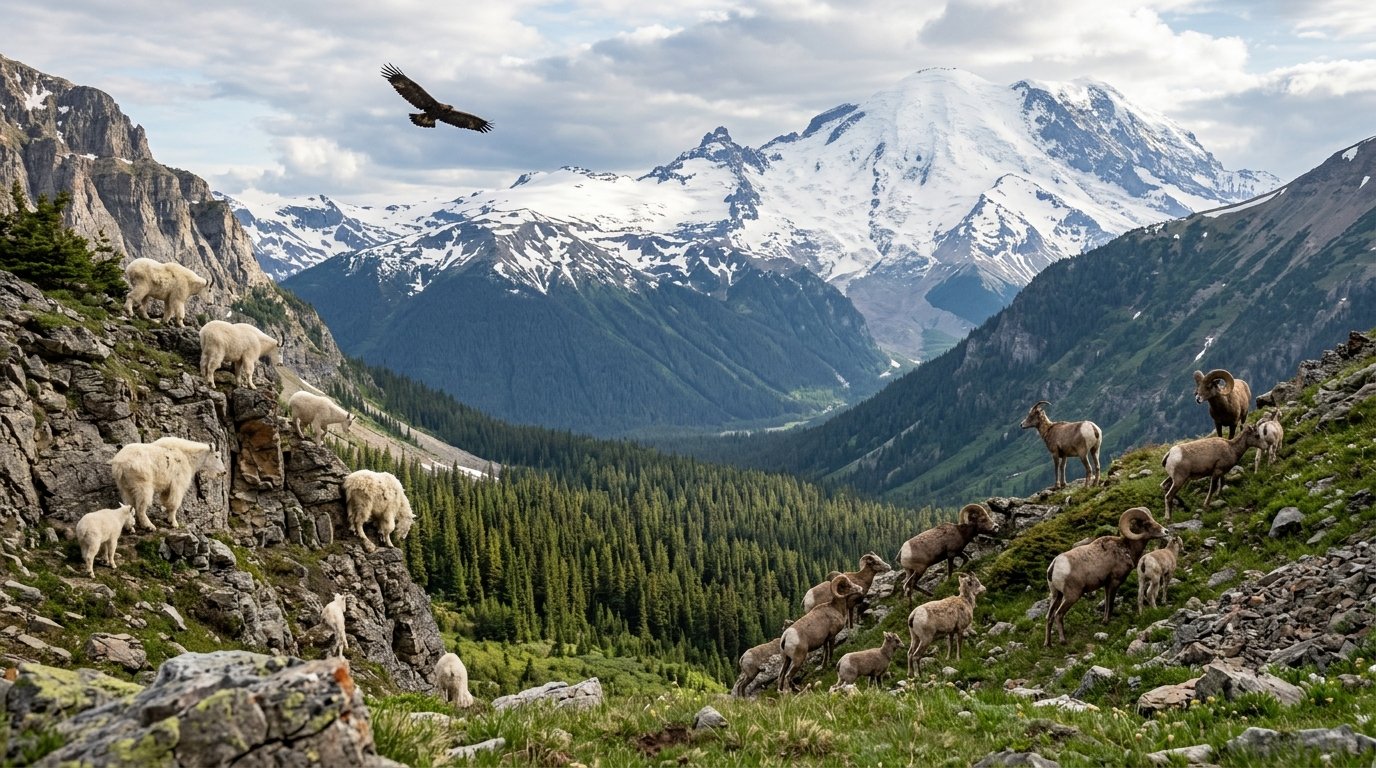
Mountains are some of the most challenging habitats on Earth. High elevations, steep slopes, freezing temperatures, strong winds, and limited food make mountain environments difficult places for animals to survive. Yet many species have developed remarkable ways to live in these demanding conditions.Animals That Live in the Mountains
When we talk about animals that live in the mountains, we are referring to a wide variety of mammals, birds, reptiles, amphibians, and smaller creatures. Some spend most of their lives among rocky peaks, while others live in forests and grasslands found along lower mountain slopes.Animals That Live in the Mountains
Mountain wildlife differs from one region to another because every mountain range has its own climate, vegetation, and geography.
Why Do Animals Live in the Mountains?
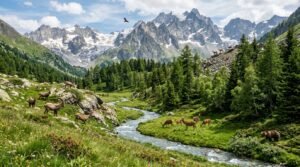
Mountain habitats provide several important resources for wildlife.
Food Sources
Mountain animals may find grasses, leaves, fruits, seeds, insects, fish, and other animals for food. The available food often changes with elevation and season.
Shelter
Rocky cliffs, caves, tree hollows, dense vegetation, and underground burrows provide protection from predators and extreme weather.
Natural Protection
Steep cliffs and difficult terrain can make some mountain habitats difficult for predators and humans to reach.
Fresh Water
Mountain streams, snowmelt, springs, and small lakes provide water for wildlife and support surrounding ecosystems.
Mountain Goats
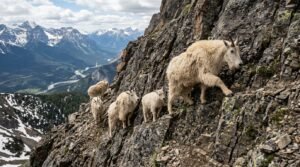
Mountain goats are among the animals most strongly associated with high mountain environments.
They have specialized hooves that provide excellent grip on rocky surfaces. Their strong legs allow them to move across steep slopes and cliffs where many other animals would struggle.Animals That Live in the Mountains
Their thick coats also help protect them from cold temperatures and strong mountain winds.
How Mountain Goats Survive
Mountain goats often feed on grasses, herbs, shrubs, mosses, and other vegetation.
They can climb steep terrain to reach food and escape potential predators.
Their physical adaptations allow them to live in areas with rocky landscapes and harsh weather.
Bighorn Sheep
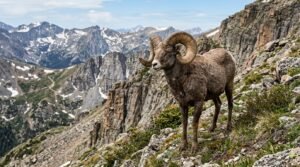
Bighorn sheep are another impressive mountain species.
They are powerful animals with strong legs that allow them to move across rocky terrain.
Their specialized hooves help them maintain balance on steep slopes.
Mountain Adaptations
Bighorn sheep can survive in environments where food may be limited during certain seasons.
They often move between different elevations depending on weather and food availability.
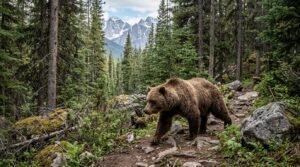
Bears
Several bear species live in or around mountainous habitats.
Bears are highly adaptable and can survive in forests, valleys, and higher elevations depending on the species and region.
Their diets may include berries, roots, insects, fish, vegetation, and other available food.
Seasonal Survival
In colder mountain regions, some bears reduce their activity during winter and rely on stored body energy.
Mountain forests can provide important shelter and food before and after the coldest part of the year.
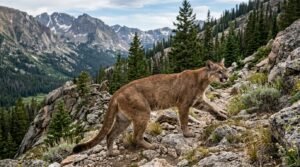
Mountain Lions
Mountain lions are powerful predators that can live across a wide range of elevations.
They are capable of traveling through forests, rocky landscapes, grasslands, and remote mountain areas.
Their muscular bodies and strong legs help them navigate challenging terrain.
Why Mountain Lions Are Successful
Mountain lions are skilled hunters and generally prefer areas where prey is available and human activity is relatively low.
Their ability to adapt to different environments makes them one of the most widespread large predators in the mountainous regions of North America.
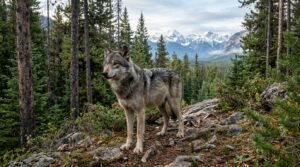
Wolves
Wolves can live in mountainous forests, valleys, and open highland areas.
They are social animals that often live and hunt in groups.
Their thick fur helps protect them from cold temperatures, while their strong legs allow them to travel long distances across difficult terrain.
Their Role in Mountain Ecosystems
As predators, wolves can influence populations of herbivores such as deer and elk.
This helps maintain a balance between predators, prey, and vegetation.
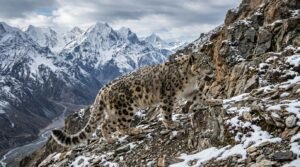
Snow Leopards
Snow leopards are specially adapted to high mountain environments in Central and South Asia.
Their thick fur provides insulation against cold temperatures, while their long tails help with balance on steep rocky slopes.
Their wide paws can act like natural snowshoes, helping them move across snowy terrain.
Mountain Camouflage
Their pale coats with dark markings help them blend into rocky and snowy surroundings.
This camouflage is especially useful when approaching prey or avoiding detection.
Mountain Birds
Birds are also an important part of mountain ecosystems.
Many species have adaptations that allow them to fly through strong winds and survive at high elevations.
Golden Eagles
Golden eagles can be found in many mountainous regions.
Their powerful wings allow them to soar above valleys and cliffs while searching for prey.
They may build nests on cliffs or other elevated locations that provide protection and a broad view of the surrounding area.
Vultures
Some vulture species live in mountainous environments.
They use rising air currents to glide across large distances while searching for food.
Their role as scavengers helps remove animal remains from the environment.
Mountain Rabbits and Hares
Rabbits and hares can survive in mountainous areas where vegetation provides enough food.
Some species have thick fur that helps protect them from cold temperatures.Animals That Live in the Mountains
Mountain hares in particular can display seasonal changes in coat color, helping them blend into snowy winter landscapes.
Marmots
Marmots are burrowing mammals commonly associated with mountain environments.
They live in underground burrows that provide protection from predators and extreme weather.
During colder months, many marmots enter a deep period of winter dormancy.
Why Burrows Matter
A burrow provides a stable environment below the surface.
It can protect animals from freezing temperatures, strong winds, and predators.
Pikas
Pikas are small mountain mammals related to rabbits.
They are especially well adapted to rocky environments.
Pikas collect vegetation during warmer months and store it in sheltered locations. These food supplies help them survive when snow covers the ground.
Their small bodies and dense fur help them cope with cold mountain conditions.
Mountain Reptiles
Although cold temperatures can make high elevations difficult for reptiles, some species can survive in lower mountain regions and sunny rocky habitats.
Mountain Lizards
Some lizards live among rocks and vegetation on mountain slopes.
They often use sunlight to warm their bodies because reptiles depend on external heat sources.
Snakes
Certain snake species can also be found in mountainous regions.
They may live in forests, rocky valleys, grasslands, and sunny slopes depending on the species.
Mountain Amphibians
Moist mountain environments can support frogs, salamanders, and other amphibians.
Mountain streams and springs provide suitable breeding habitats for some species.
Salamanders
Many salamanders require cool, damp environments.
They may live beneath rocks, fallen logs, leaves, or near streams.Animals That Live in the Mountains
Because amphibians can be sensitive to environmental changes, their presence can provide useful information about ecosystem conditions.Animals That Live in the Mountains
How Mountain Animals Adapt to Cold Weather
Cold temperatures are one of the biggest challenges for animals living at high elevations.
Thick Fur
Many mountain mammals have dense coats that trap warm air close to their bodies.
Fat Reserves
Some species build up fat reserves before winter to provide energy when food becomes scarce.
Burrowing
Underground shelters provide protection from cold winds and freezing temperatures.
Reduced Activity
Some animals reduce their activity during the coldest periods to conserve energy.
How Animals Survive at High Elevations
High elevations can have lower oxygen levels and unpredictable weather.
Animals living in these environments may have specialized lungs, efficient circulation, or other physiological adaptations.
Some species also have strong hearts and muscles that help them move through steep terrain.
Seasonal Migration in Mountain Habitats
Not every mountain animal remains at the same elevation throughout the year.
Some species move to lower elevations during winter when temperatures drop and food becomes harder to find.
Others move upward during warmer months when fresh vegetation becomes available.
This movement allows animals to take advantage of changing environmental conditions.
Why Mountain Wildlife Is Important
Mountain animals play important roles in their ecosystems.
Herbivores influence plant growth by feeding on vegetation. Predators help regulate prey populations. Birds and mammals can spread seeds, while insects contribute to pollination and decomposition.Animals That Live in the Mountains
Because these species are connected, changes affecting one animal can sometimes influence many others.Animals That Live in the Mountains
Threats Facing Mountain Animals
Mountain wildlife faces several environmental challenges.Animals That Live in the Mountains
Habitat Loss
Roads, construction, mining, agriculture, and other development can reduce available habitat.
Climate Change
Changing temperatures and snowfall patterns can alter food availability and suitable habitats.
Human Disturbance
Tourism and recreational activities can disturb breeding areas, nesting sites, and feeding grounds.
Pollution
Waste and contaminated water can damage mountain ecosystems.
Protecting natural habitats is essential for maintaining healthy mountain wildlife populations.
How People Can Help Protect Mountain Wildlife
People visiting mountain environments can help by staying on designated trails, keeping a safe distance from wildlife, avoiding feeding wild animals, and taking waste home.Animals That Live in the Mountains
Respecting nesting areas, keeping pets under control where required, and following local conservation rules can also reduce disturbance.
Even small actions can help preserve mountain habitats for future generations.Animals That Live in the Mountains
Frequently Asked Questions
What animals live in the mountains?
Mountain habitats can support goats, sheep, bears, mountain lions, wolves, eagles, marmots, pikas, hares, reptiles, amphibians, and many smaller animals.
How do mountain animals survive the cold?
They may use thick fur, fat reserves, underground shelters, seasonal behavior, and reduced activity to cope with low temperatures.
Do all mountain animals live at high elevations?
No. Some species live mainly in mountain forests, valleys, grasslands, or lower slopes rather than near the highest peaks.
Why do mountain animals have strong legs?
Strong legs help many species climb steep slopes, cross rocky terrain, escape predators, and search for food.
Are mountain animals dangerous?
Most wild animals avoid humans when given enough space. However, all wild animals should be observed from a safe distance and never approached or fed.
Final Thoughts
The world of animals that live in the mountains is remarkably diverse. From agile mountain goats and bighorn sheep to powerful predators, soaring birds, tiny pikas, and amphibians living near cool streams, each species has unique adaptations that help it survive.Animals That Live in the Mountains
Mountain environments may appear harsh, but they provide essential habitats for countless creatures. Protecting forests, grasslands, rocky slopes, streams, and other mountain ecosystems is therefore important for wildlife and the natural balance of these remarkable landscapes.Animals That Live in the Mountains
By respecting wild animals and preserving their habitats, we can help ensure that mountain ecosystems remain healthy and continue supporting wildlife for generations to come.Animals That Live in the Mountains