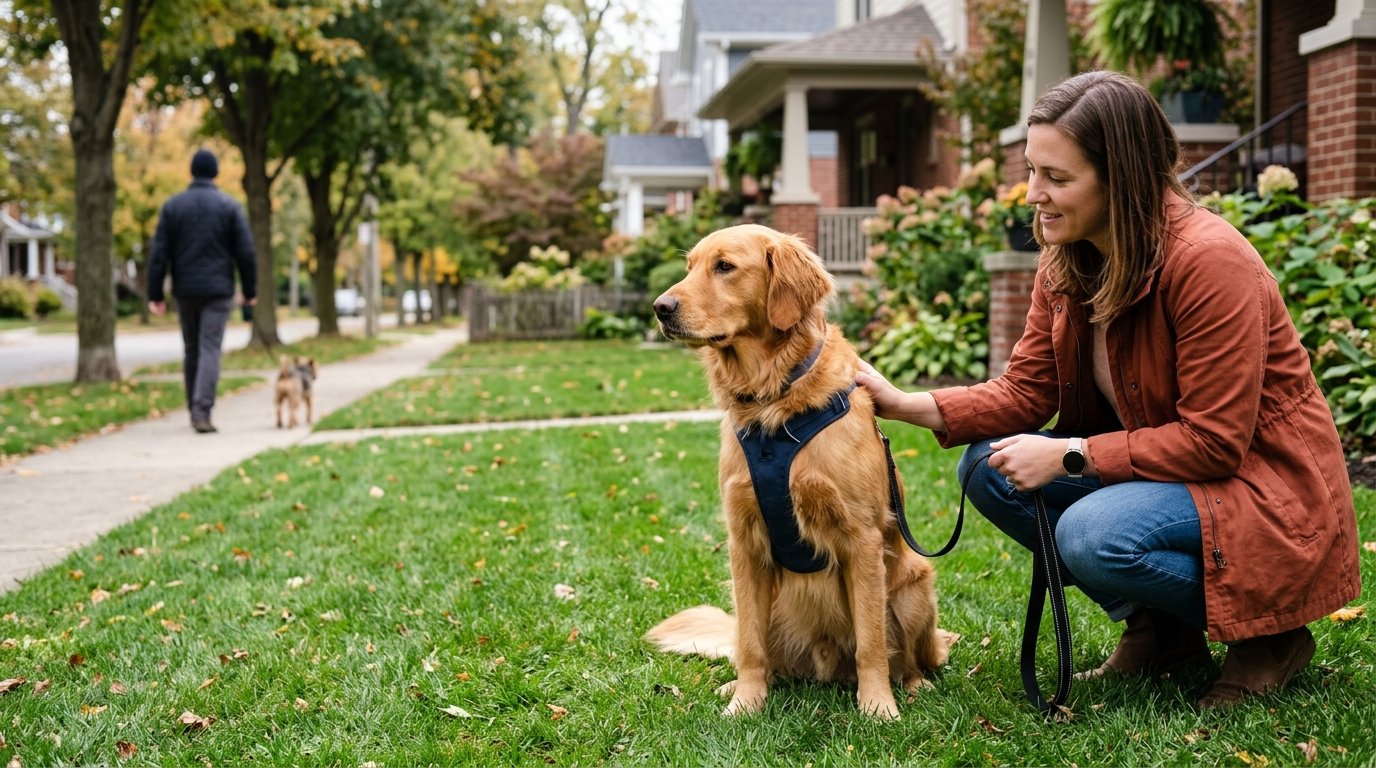
How to Stop a Dog From Barking at Strangers
How to Stop a Dog From Barking at Strangers!A dog barking at strangers is a common behavior that can become frustrating if it happens frequently. Your dog may bark when someone walks past the house, approaches the front door, enters the home, or comes close during a walk. Although barking is a normal way for dogs to communicate, excessive barking can make everyday situations difficult.How to Stop a Dog From Barking at Strangers
Learning how to stop a dog from barking at strangers starts with understanding why the barking happens. A dog may bark because it feels nervous, protective, excited, territorial, or simply unsure about unfamiliar people. The right training approach depends on the reason behind the behaviorHow to Stop a Dog From Barking at Strangers
Instead of trying to completely silence your dog, the goal should be to teach it when barking is unnecessary and how to remain calm around unfamiliar peopleHow to Stop a Dog From Barking at Strangers
Why Do Dogs Bark at Strangers?
Dogs bark for different reasons, and identifying the cause can make training much easier.How to Stop a Dog From Barking at StrangersHow to Stop a Dog From Barking at Strangers
Fear or Nervousness
Some dogs bark because unfamiliar people make them uncomfortable. Barking may be their way of creating distance from someone they perceive as threatening.
A nervous dog may also hide behind its owner, lower its body, move backward, or avoid eye contact.How to Stop a Dog From Barking at Strangers

Territorial Behavior
Dogs can become protective of their home and surrounding area. When someone approaches the front door, gate, window, or yard, the dog may believe that it needs to protect its territory.How to Stop a Dog From Barking at Strangers
This type of barking is particularly common when strangers walk past the house.
Excitement
Not every barking dog is afraid. Some dogs become excited when they see new people.
A dog may bark, jump, wag its tail, pull toward the person, and try to get closer. In this situation, the barking may be connected to excitement rather than aggression.
Lack of Socialization
Dogs that have had limited positive experiences with different people may be more likely to react strongly to strangers.
Gradual and positive exposure can help a dog become more comfortable with unfamiliar people.
Don’t Punish Your Dog for Barking
One of the most important things to understand is that punishment can sometimes make the problem worse.
Yelling at a barking dog may increase its excitement or anxiety. The dog may interpret your shouting as additional evidence that something is wrong.
Instead of repeatedly shouting “stop,” teach an alternative behavior and reward your dog for remaining calm.
Identify the Barking Trigger
Before starting training, pay attention to exactly when your dog begins barking.
Does it bark when:
- Someone walks past the house?
- A stranger approaches the door?
- Someone enters the yard?
- You meet unfamiliar people outside?
- A person gets too close?
- Someone moves suddenly?
Understanding the trigger allows you to create a more effective training plan.

Keep a Safe Distance During Training
If your dog reacts strongly to strangers, do not immediately force it to stand close to unfamiliar people.
Start at a distance where your dog can notice the person without becoming overwhelmed.
When your dog sees a stranger and remains relatively calm, offer praise and an appropriate reward.
Over time, you can gradually decrease the distance as long as your dog remains comfortable.
Reward Calm Behavior
Rewarding calm behavior is one of the most useful ways to change your dog’s response.
For example, imagine your dog notices a stranger walking nearby.
If your dog looks at the person but does not bark, immediately praise the calm behavior and provide a suitable reward.
With repetition, the dog begins to learn:
Stranger appears → stay calm → good things happen.
This is much more useful than only correcting the dog after barking has already started.
Teach a “Quiet” Cue
Once your dog understands basic commands, you can gradually introduce a cue such as “quiet.”
Allow your dog to bark briefly when appropriate. Then calmly say the cue.
When the dog stops barking, even for a moment, reward it.
Repeat this exercise regularly.
Avoid shouting the cue because your dog may interpret loud speech as another form of barking.
Teach an Alternative Behavior
Instead of simply telling your dog what not to do, teach it what you want it to do.
For example, you can teach your dog to:
- Sit
- Look at you
- Go to a specific mat
- Stay
- Come when called
If someone approaches the door, asking your dog to go to its designated place can give it a clear job.
Reward the dog for remaining there calmly.

Practice With Controlled Visitors
Once your dog can remain calm at a distance, controlled practice can help.
Ask someone the dog does not know well to participate in a training session.
Keep the dog at a comfortable distance and reward calm behavior.
The visitor should avoid staring directly at the dog, rushing toward it, or forcing physical contact.
Allow the dog to decide when it feels comfortable enough to approach.
Manage Doorbell Barking
The doorbell can be a powerful barking trigger.
You can practice the situation without having a real visitor.
Ask someone to ring the bell while you remain with your dog.
When the bell rings, redirect your dog’s attention toward you or its designated place.
Reward calm behavior.How to Stop a Dog From Barking at Strangers
Repeat the exercise in short sessions until the sound becomes less exciting.
Reduce Window Barking
If your dog repeatedly barks at people through windows, managing access to those windows can help.
Close curtains or use suitable window coverings during busy periods.
You can also move the dog’s resting area away from windows that provide a clear view of passing pedestrians.
This does not replace training, but it reduces repeated opportunities for barking.
Give Your Dog Enough Exercise
A dog with excess energy may react more intensely to environmental triggers.
Daily physical activity appropriate for your dog’s age, health, and breed can help support better behavior.
Walks, play sessions, training games, and mentally stimulating activities can all be useful.
However, exercise should not be treated as the only solution. A dog may still bark at strangers even when physically tired if the underlying issue is fear or territorial behavior.How to Stop a Dog From Barking at Strangersv
Use Mental Stimulation
Mental activities can help keep your dog occupied.
Food puzzles, scent games, obedience exercises, and interactive toys can provide appropriate mental challenges.How to Stop a Dog From Barking at Strangers
A dog that regularly receives both physical and mental stimulation may have an easier time settling down.

Avoid Forcing Your Dog to Meet Strangers
Never force a nervous dog to interact with unfamiliar people.
For example, pulling your dog toward a stranger or insisting that someone pet it can increase fear.
Instead, allow the dog to observe from a comfortable distance.
When the dog remains calm, reward it.
Gradual exposure is usually more helpful than overwhelming the dog.
Be Consistent With Everyone
Training works best when everyone in the household follows the same rules.
If one person allows the dog to bark at visitors while another person expects silence, the dog may become confused.
Everyone should understand which behaviors are rewarded and which situations require redirection.
Consistency can make training much clearer for the dog.
What If Your Dog Barks During Walks?
Barking at strangers outside can be challenging because people may suddenly appear.
Try to notice approaching people before your dog becomes highly reactive.How to Stop a Dog From Barking at Strangers
Create more distance if necessary. Ask your dog to focus on you and reward calm behavior.
If the person passes without your dog barking, provide positive reinforcement.
With repeated practice, your dog can gradually learn that seeing unfamiliar people does not require a barking response.

Don’t Reward Unwanted Barking Accidentally
Sometimes owners unintentionally reinforce barking.
For example, if a dog barks at someone outside and the person eventually walks away, the dog may believe its barking successfully made the person leave.
Management and training can help prevent this association.
Redirect your dog before the barking becomes intense and reward calm behavior whenever possible.
Be Patient With Progress
Changing a barking habit takes time.
Some dogs improve within a few training sessions, while others need weeks or longer.
Progress may not happen in a straight line. Your dog might remain calm one day and react strongly the next.
This does not necessarily mean training has failed.
Continue practicing in manageable situations and gradually increase the difficulty.
When Should You Seek Professional Help?
If your dog’s barking is accompanied by lunging, snapping, biting attempts, intense fear, or aggressive behavior, professional guidance is recommended.
A qualified positive-reinforcement trainer or veterinary behavior professional can help identify the underlying cause and develop an appropriate training plan.
If the behavior appears suddenly in a previously calm dog, a veterinary check may also be appropriate because health or pain-related problems can sometimes affect behavior.How to Stop a Dog From Barking at Strangers
Frequently Asked Questions
How can I stop my dog from barking at strangers?
Identify the trigger, keep your dog at a comfortable distance, reward calm behavior, and gradually expose it to unfamiliar people in controlled situations.
Should I yell “quiet” at my dog?
It is better to use a calm voice. Yelling can increase excitement or anxiety and may make barking worse.
Should strangers pet my barking dog?
Not necessarily. If your dog is nervous or reactive, give it space and allow it to become comfortable gradually.

Can treats help stop barking?
Treats can be useful for rewarding calm behavior and creating positive associations with strangers. They should be used as part of a broader training strategy.
Will exercise stop my dog from barking?
Exercise can help reduce excess energy, but it does not automatically solve fear, anxiety, or territorial barking.
Final Thoughts
Learning how to stop a dog from barking at strangers requires patience, consistency, and an understanding of why the behavior occurs. Barking is normal communication, so the goal is not necessarily to eliminate every bark. Instead, teach your dog how to remain calm when unfamiliar people appearHow to Stop a Dog From Barking at Strangers
Identify the triggers, maintain a comfortable distance, reward quiet behavior, teach useful commands, and provide controlled opportunities for positive experiences. Avoid punishment and never force a nervous dog into uncomfortable interactions.How to Stop a Dog From Barking at Strangers
With consistent training and appropriate management, many dogs can learn that strangers do not automatically represent a threat and that calm behavior is a better choice.How to Stop a Dog From Barking at Strangers