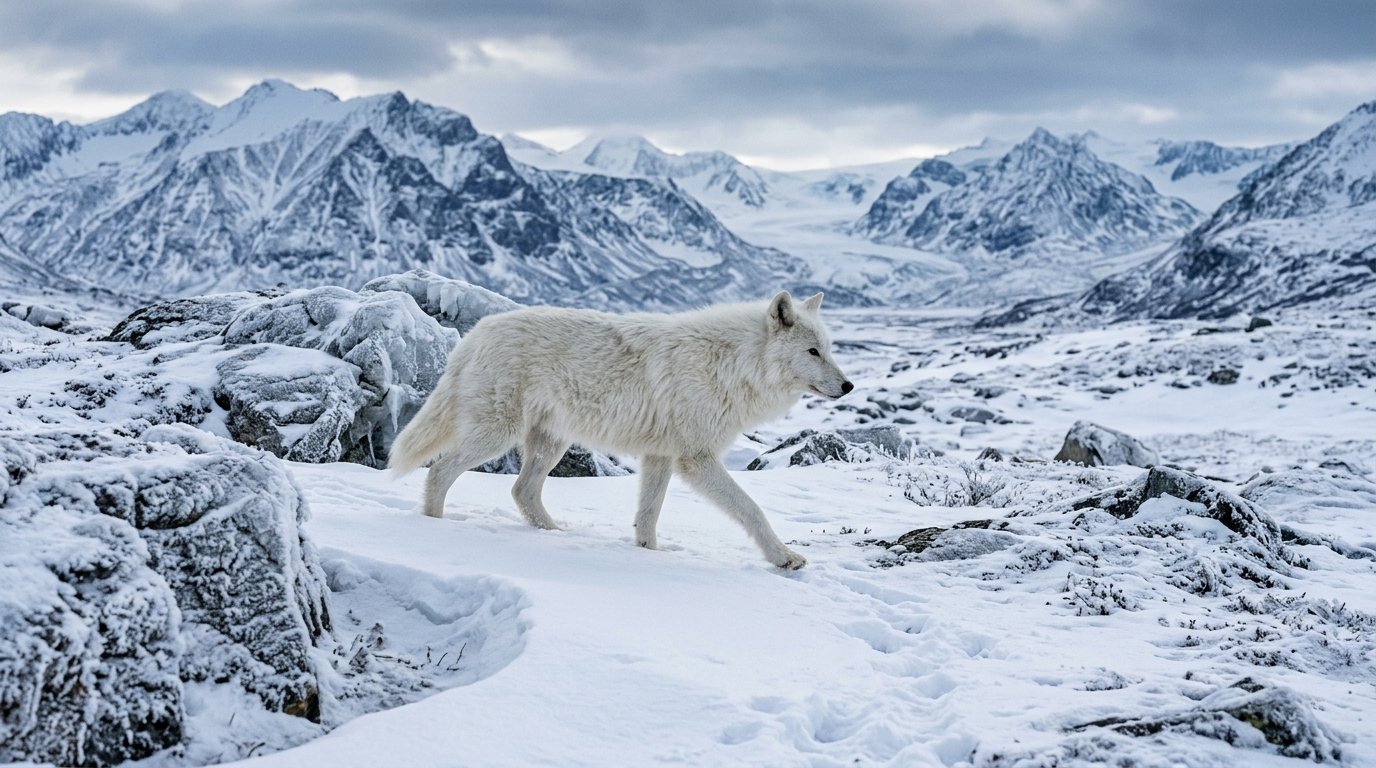
Animals That Live in the Arctic
Animals That Live in the Arctic! The Arctic is one of the coldest and most challenging environments on Earth. It is a vast region of frozen seas, snow-covered land, tundra, glaciers, and seasonal ice. Despite the extreme conditions, many remarkable creatures have adapted to survive there.Animals That Live in the Arctic
The animals that live in the Arctic have developed special physical and behavioral adaptations that help them deal with freezing temperatures, strong winds, limited vegetation, and long periods of darkness. Some live primarily on land, while others depend heavily on the Arctic Ocean and sea ice.Animals That Live in the Arctic
Arctic wildlife is closely connected to the environment. Changes in sea ice, temperature, food availability, and weather can have a major impact on these animalsAnimals That Live in the Arctic.
What Makes the Arctic Difficult for Animals*
The Arctic presents several challenges that most animals do not experience in warmer regions.
Extremely Cold Temperatures
Winter temperatures can fall far below freezing. Animals need effective ways to conserve body heat.
Limited Vegetation
Only certain plants can survive the short Arctic growing season. This means food can become scarce, especially during winter.
Long Periods of Darkness
Some Arctic areas experience weeks or months with very little sunlight during winter.
Changing Sea Ice
Many marine animals depend on sea ice for resting, breeding, hunting, or raising young.
Despite these difficulties, Arctic animals have developed remarkable survival strategies.
Polar Bears
Polar bears are among the most recognizable animals associated with the Arctic.
They spend much of their time around sea ice and coastal areas. Their powerful bodies, thick fur, and layer of body fat help protect them from extremely cold conditions.
What Do Polar Bears Eat?
Polar bears are primarily meat eaters. Their diet can include seals and other marine animals when available.
Sea ice is especially important because it provides access to hunting areas.
Why Sea Ice Matters
Polar bears depend heavily on sea ice for parts of their hunting and movement patterns. Changes in the amount and timing of sea ice can therefore affect their ability to find food.
Arctic Foxes
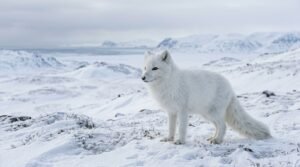
Arctic foxes are small mammals specially adapted to cold environments.
They have thick fur that changes color seasonally in many populations. Their winter coat can provide excellent camouflage against snow, while warmer-season coats can blend with tundra vegetation.Animals That Live in the Arctic
Surviving the Cold
Arctic foxes have compact bodies, short ears, and thick fur that help reduce heat loss.
They can also use sheltered areas and burrows to protect themselves from harsh winds.
What Do Arctic Foxes Eat?
Their diet can include small mammals, birds, eggs, fish, insects, and carrion.
This flexible diet helps them survive when particular food sources become difficult to find.
Arctic Hares
Arctic hares are built to survive cold northern environments.
They have thick fur, strong legs, and relatively compact ears that help conserve body heat.
Their diet mainly consists of plants and other vegetation available in the Arctic environment.
Seasonal Camouflage
Their fur can become much lighter during winter, helping them blend into snowy surroundings.
Camouflage can provide protection from predators.
Reindeer and Caribou
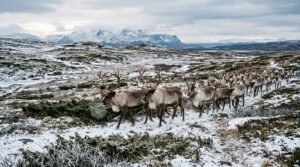
Reindeer and caribou are among the most important large herbivores of northern ecosystems.
The names generally refer to the same species, although “caribou” is commonly used in North America while “reindeer” is widely used elsewhere.
They can travel long distances in search of food.
Specialized Hooves
Their hooves help them move across snow, wet ground, and uneven tundra.
During winter, they feed on available vegetation, including lichens and other plant material.
Large Herds
Some populations travel in large groups during seasonal movements.
These migrations can cover significant distances and help animals reach areas with better food availability.
Musk Oxen
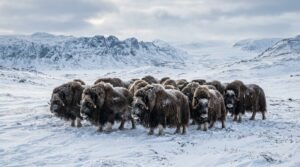
Musk oxen are powerful Arctic herbivores with thick coats.Animals That Live in the Arctic
Their long outer hair and dense undercoat provide excellent insulation against cold temperatures.
Defense Against Predators
When threatened, musk oxen can form a protective group with adults facing outward and younger animals positioned inside.
This defensive behavior can help protect vulnerable members of the group.Animals That Live in the Arctic
Arctic Wolves
Arctic wolves are adapted to northern environments where temperatures can become extremely low.
Their thick fur provides insulation, while their strong bodies allow them to travel across snowy landscapes.
They may hunt animals such as musk oxen, Arctic hares, and other available prey.Animals That Live in the Arctic
Living in Harsh Conditions
Arctic wolves can travel long distances while searching for food.
Their ability to survive in remote environments makes them important predators in Arctic ecosystems.
Seals
Several seal species are closely associated with Arctic waters and sea ice.
Seals spend much of their lives in the ocean but may use ice for resting, breeding, and raising young.
Ringed Seals
Ringed seals are particularly important in Arctic ecosystems.
They can create breathing holes in sea ice and feed on fish and other marine organisms.
They are also an important food source for larger Arctic predators.
Harp Seals
Harp seals are another northern species associated with icy marine environments.
They spend much of their lives in the ocean and may gather in large groups.
Walruses
Walruses are large marine mammals recognized by their long tusks and whiskers.
They use sea ice and coastal areas for resting.
Their sensitive whiskers help them locate food along the ocean floor.
What Do Walruses Eat?
Walruses primarily feed on bottom-dwelling marine organisms, including clams and other invertebrates.
Their powerful bodies and specialized feeding structures help them search through sediments for food.
Narwhals
Narwhals are unusual Arctic whales famous for the long tusk found in many males.
They live in Arctic waters and are highly adapted to marine environments.
Narwhals feed on fish, squid, and other marine organisms.
Life Beneath the IceAnimals That Live in the Arctic
Narwhals can travel through areas of sea ice and rely on openings in the ice to breathe.
Their seasonal movements are closely connected to changing Arctic conditions.
Beluga Whales
Beluga whales are often called “white whales” because adults have pale or white bodies.
They are highly social animals and can form groups in Arctic and sub-Arctic waters.
Belugas feed on various fish and marine invertebrates.
Communication
Beluga whales are known for their wide range of vocalizations.
Their ability to communicate is particularly important in the complex underwater environment where visibility can be limited.
Arctic Birds
The Arctic is also home to numerous bird species.
Some remain in the region year-round, while others migrate long distances to take advantage of Arctic breeding grounds during warmer months.
Snowy Owls
Snowy owls are strongly associated with Arctic tundra.
Their white plumage provides excellent camouflage in snowy environments, although coloration varies between individuals.
They primarily feed on small mammals and other available prey.
Arctic Terns
Arctic terns are famous for their extraordinary migrations.
They travel between the Arctic and Antarctic regions, making one of the longest known migrations of any animal.
They feed mainly on small fish and marine invertebrates.
Arctic Seabirds
Many seabirds depend on Arctic coastal environments for breeding and feeding.
They may nest on cliffs, islands, and rocky coastal areas.
The ocean provides important sources of fish and other marine food.
These birds are an essential part of Arctic food webs.
How Arctic Animals Stay Warm
Survival in the Arctic requires effective ways to conserve body heat.
Thick Fur
Mammals such as Arctic foxes and polar bears have dense fur that provides insulation.
Layers of Fat
Marine mammals often depend on thick layers of body fat, known as blubber, to maintain warmth in cold water.
Compact Body Shapes
Some Arctic mammals have relatively compact body structures that reduce exposed surface area and help limit heat loss.
Behavioral Adaptations
Animals may seek shelter, change their activity patterns, huddle together, or use protected areas to avoid extreme weather.
How Arctic Animals Find Food
Food availability can change dramatically throughout the year.
During the warmer season, plants become available on the tundra, while marine productivity can increase in coastal waters.
During winter, many animals depend on stored body energy, specialized diets, or food sources that remain available beneath snow and ice.
Predators must also adapt their hunting strategies according to seasonal conditions.
Why Arctic Animals Are Important
Arctic wildlife plays an important role in maintaining ecological balance.
Herbivores influence tundra vegetation. Predators help regulate prey populations. Marine animals transfer nutrients through Arctic food webs.
Each species contributes to the larger ecosystem.
Changes affecting one species can sometimes create consequences for other animals that depend on it for food or habitat.
Threats to Arctic Wildlife
Arctic animals face several environmental challenges.
Climate Change
Rising temperatures can alter sea ice, snow conditions, vegetation, and marine ecosystems.
Loss of Sea Ice
Animals that depend on sea ice for hunting, resting, breeding, or movement may be particularly affected by changes in ice conditions.
Pollution
Plastic, chemicals, oil, and other pollutants can enter Arctic ecosystems and affect wildlife.
Human Activity
Shipping, resource development, tourism, and other activities can disturb habitats and wildlife when not carefully managed.
How Arctic Wildlife Can Be Protected
Protecting Arctic animals requires protecting the ecosystems they depend on.
Conservation efforts can include protecting important breeding areas, reducing pollution, managing human activities responsibly, and monitoring changes in wildlife populations.Animals That Live in the Arctic
Reducing greenhouse gas emissions is also important because climate conditions strongly influence Arctic ecosystems.
Frequently Asked Questions
What animals live in the Arctic?
The Arctic is home to polar bears, Arctic foxes, Arctic hares, caribou, musk oxen, Arctic wolves, seals, walruses, narwhals, beluga whales, snowy owls, Arctic terns, and many other species.Animals That Live in the Arctic
Do all Arctic animals live on land?
No. Many Arctic species are marine animals that spend much of their lives in the ocean. Others live primarily on tundra, mountains, or coastal areas.
How do Arctic animals survive extreme cold?
They use adaptations such as thick fur, blubber, body fat, seasonal camouflage, compact body shapes, burrows, and behavioral changes.
Why is sea ice important?
Sea ice provides essential habitat for several Arctic species. It can serve as a platform for hunting, resting, breeding, and traveling.
Are Arctic animals endangered?
The conservation status varies by species. Some populations are stable in certain areas, while others face significant pressures from habitat changes, climate change, pollution, and human activity.Animals That Live in the Arctic
Final Thoughts
The animals that live in the Arctic demonstrate some of the most fascinating adaptations found in nature. Polar bears, Arctic foxes, musk oxen, seals, walruses, whales, birds, and many other species have developed specialized ways to survive in an environment defined by cold temperatures, snow, ice, and seasonal changes.Animals That Live in the Arctic
The Arctic may appear empty and frozen at first glance, but it is actually a complex ecosystem filled with life. Protecting this environment is essential because Arctic wildlife depends closely on the condition of the land, ocean, and sea ice.Animals That Live in the Arctic
By understanding these remarkable animals and the challenges they face, we can better appreciate the importance of preserving one of the world’s most unique natural environments.Animals That Live in the Arctic