How to Train a Puppy Not to Bite
How to Train a Puppy Not to Bite!Puppies are naturally curious, energetic, and playful.One of the most common behaviors new puppy owners face is biting. A puppy may bite fingers during play, chew on shoes, grab clothing, or gently nip at people’s hands. Although this behavior is usually a normal part of puppy development, teaching good habits early can prevent it from becoming a bigger problem later.
Learning ow to trahin a puppy not to bite is not about punishing your puppy whenever its teeth touch your skin. Instead, effective training focuses on teaching the puppy what it should bite, how hard it is allowed to play, and how to respond appropriately when excitement gets out of control.How to Train a Puppy Not to Bite
With patience, consistency, and plenty of positive reinforcement, most puppies can learn to use their mouths more gently.
Why Do Puppies Bite So Much?
Before correcting biting, it helps to understand why puppies do it.
Exploring the World
Puppies investigate their surroundings with their mouths. Just as human babies touch and grab objects, puppies naturally pick things up and chew them.
Your hands, shoelaces, furniture, toys, and clothing can all become interesting targets.
Teething
Growing puppies go through a teething period during which their mouths may feel uncomfortable. Chewing can provide relief and gives them something productive to do.How to Train a Puppy Not to Bite
Providing appropriate puppy-safe chew toys can help redirect this natural urge.

Playing
Biting is also part of normal puppy play. Puppies often wrestle, chase, grab, and mouth each other.
When a puppy moves into a human household, it needs to learn that human skin is different from another puppy’s body.
Getting Attention
Some puppies discover that biting immediately gets a reaction. If everyone starts talking, moving, or chasing the puppy after a nip, the puppy may see biting as an excellent way to start a game.How to Train a Puppy Not to Bite
This is why calm and consistent responses are important.
Is Puppy Biting Normal?
For most young puppies, some amount of mouthing and nipping is normal. The goal is not necessarily to stop every mouth movement instantly.
Instead, owners should teach puppies bite inhibition and appropriate alternatives.How to Train a Puppy Not to Bite
A puppy should learn that human skin is not a chew toy and that toys are a much better choice for biting and tugging.
How to Train a Puppy Not to Bite
1. Redirect the Puppy to a Toy
One of the easiest ways to manage puppy biting is redirection.
When your puppy tries to bite your hand, calmly offer a suitable toy instead. Move the toy away from your fingers and encourage the puppy to grab it.
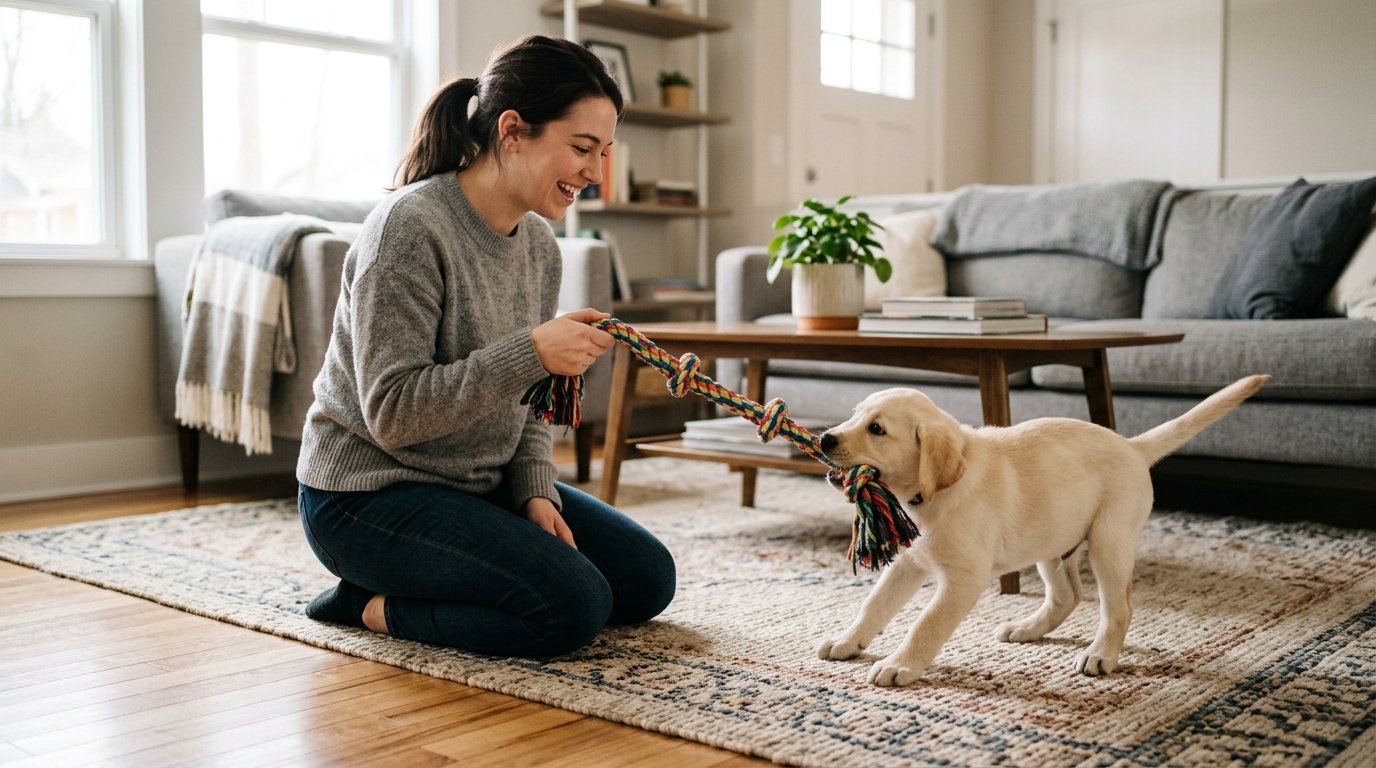
For example, if your puppy starts mouthing your hand during play, place a soft tug toy between you and the puppy.
The message becomes simple:How to Train a Puppy Not to Bite
“You can bite this, but not me.”
With repetition, the puppy can begin choosing toys instead of hands.

2. Stop the Game When Biting Becomes Too Rough
Puppies often become more excited during play. As excitement increases, their biting may become harder or more frequent.
When this happens, stop interacting for a short period.
Stand still, remove your hands, and avoid turning the moment into another exciting game.
Once the puppy becomes calmer, offer an appropriate toy and resume gentle play.
This teaches an important lesson:How to Train a Puppy Not to Bite
Rough biting makes the fun stop. Gentle play keeps the game going.
3. Use Positive Reinforcement
Reward the behavior you want to see.
When your puppy calmly plays with a toy, sits without biting, or responds to a cue instead of nipping, give praise, affection, or an appropriate treat.
Positive reinforcement helps the puppy understand exactly which behavior earns rewards.
4. Teach a Simple “Leave It” Cue
Teaching your puppy to leave an object alone can become extremely useful.
Start with a low-value object and reward the puppy for looking away from it. Gradually practice with more interesting items.
Once the puppy understands the cue, you can use it when it approaches clothing, hands, shoes, or other inappropriate objects.
Keep training sessions short and positive.How to Train a Puppy Not to Bite

Provide Plenty of Appropriate Chew Toys
A puppy that has nothing suitable to chew will probably find something else.
Keep several puppy-safe toys available and rotate them regularly so they remain interesting.
Different puppies enjoy different textures. Some prefer rubber toys, while others enjoy soft toys or suitable chew products.
Always supervise your puppy with toys and remove anything that becomes damaged or small enough to swallow.
Make Toys More Interesting
Instead of leaving every toy on the floor all day, rotate them.
Put some toys away and bring them back later. A toy that disappears for several days may become exciting again when it returns.
Interactive play can also make toys more valuable to your puppy.
Avoid Using Your Hands as Toys
This is one of the most important rules for new puppy owners.
Do not encourage your puppy to chase, grab, or bite your fingers during play.
Although tiny puppy teeth may seem harmless, the behavior can become much less enjoyable when the puppy grows into an adult dog.
Use toys for games such as tug, fetch, and interactive play instead.How to Train a Puppy Not to Bite
Teach Your Puppy to Stay Calm
Overexcited puppies are often more mouthy.
If your puppy becomes wild during play, take a short break. Encourage calm behavior before starting again.
You can also practice simple cues such as:
- Sit
- Stay
- Come
- Leave it
- Drop it
- Wait
Training these behaviors gives your puppy productive ways to interact with you instead of relying on biting.

Make Sure Your Puppy Gets Enough Rest
Puppies need substantial sleep. A tired puppy does not always become a sleepy puppy; sometimes it becomes an extremely energetic and mouthy one.
If your puppy starts biting everything, running around excessively, or struggling to settle, it may need a quiet break or nap.
Provide a comfortable, safe resting area where the puppy can relax without constant stimulation.
Socialize Your Puppy Properly
Appropriate socialization can help puppies develop better communication skills.
Well-managed interactions with friendly, vaccinated dogs can give puppies opportunities to learn normal canine play behavior.
Puppy classes can also provide controlled learning experiences when conducted by qualified trainers.
Socialization should be gradual and positive rather than overwhelming the puppy with too many new experiences at once.
What Not to Do When a Puppy Bites
Some traditional methods can make the problem worse.
Don’t Hit or Physically Punish the Puppy
Physical punishment can create fear and may damage the relationship between you and your puppy.
It does not teach the puppy what it should do instead.
Don’t Yell Aggressively
A loud reaction may increase excitement rather than stop it. Some puppies interpret shouting as part of the game.
Try to remain calm and consistent.
Don’t Chase the Puppy
If your puppy steals a sock and you chase it around the house, the puppy may think you are playing.
Instead, calmly exchange the object for an appropriate toy or treat when necessary.

Don’t Encourage Rough Wrestling With Hands
Allowing a puppy to bite hands during some games but not others can create confusion.
Establish clear rules from the beginningHow to Train a Puppy Not to Bite
A Simple Daily Puppy-Biting Training Routine
Consistency is more effective than one long training session.
Morning
After your puppy wakes up and has handled its basic needs, spend a few minutes practicing simple commands such as “sit” and “leave it.”
Reward calm responses.How to Train a Puppy Not to Bite
Afternoon
Use interactive toys for play. If your puppy bites your hands, immediately redirect it toward the toy.
Stop the game briefly if the puppy becomes too rough.
Evening
Provide appropriate chewing opportunities and practice calm behavior.
Reward your puppy whenever it chooses a toy instead of your hands.
Short sessions repeated throughout the day can help puppies learn faster than occasional long sessions.
How Long Does It Take to Stop Puppy Biting?
There is no exact timeline because puppies develop at different speeds.
Age, temperament, breed characteristics, previous experiences, training consistency, and the home environment can all influence progress.
Some puppies improve noticeably within weeks, while others need continued guidance as they mature.
The important thing is to focus on gradual improvement rather than expecting the behavior to disappear overnight.

When Should You Get Professional Help?
Most puppy mouthing can be managed with appropriate training. However, professional guidance may be useful if biting becomes unusually intense or is accompanied by fear, guarding, repeated aggressive behavior, or difficulty controlling the puppy.How to Train a Puppy Not to Bite
A qualified positive-reinforcement trainer or veterinary behavior professional can help identify the cause and create an appropriate training plan.
If you are concerned that your puppy’s behavior is connected to pain, illness, or another health issue, speak with your veterinarian.
Frequently Asked Questions
What is the fastest way to teach a puppy not to bite?
Consistently redirect biting toward appropriate toys, stop play when biting becomes too rough, and reward calm behavior. Repetition and consistency are more useful than punishment.How to Train a Puppy Not to Bite
Should I say “no” when my puppy bites?
You can use a calm verbal cue, but the most important part is showing the puppy what to do instead. Redirecting to a toy and rewarding appropriate behavior gives the puppy a clear alternative.How to Train a Puppy Not to Bite
Why does my puppy bite my hands but not its toys?
Hands move, react, and provide attention, which can make them more exciting than stationary toys. Use interactive toys to make appropriate play more rewarding.
Should I ignore my puppy when it bites?
Briefly removing attention can be useful when biting has become part of an attention-seeking game. After the puppy settles, redirect it toward an appropriate activity.
Do puppies stop biting as they grow?
Many puppies naturally become less mouthy as they mature, but training is still important. Teaching appropriate behavior early makes it easier for the puppy to develop good habits.How to Train a Puppy Not to BitevFinal Thoughts
Learning how to train a puppy not to bite requires patience rather than punishment. Puppy biting is often a normal combination of exploration, teething, excitement, play, and attention-seeking.
The most effective approach is to give your puppy appropriate things to chew, redirect biting toward toys, stop games when biting becomes too rough, and reward calm behavior.How to Train a Puppy Not to Bite
Avoid using physical punishment or frightening techniques. Instead, make the desired behavior easy for your puppy to understand and reward.How to Train a Puppy Not to Bite
With daily practice and consistent rules, your puppy can gradually learn that hands, feet, and clothing are not toys. The result is a calmer, gentler dog that knows how to play appropriately with its human family.How to Train a Puppy Not to Bite